
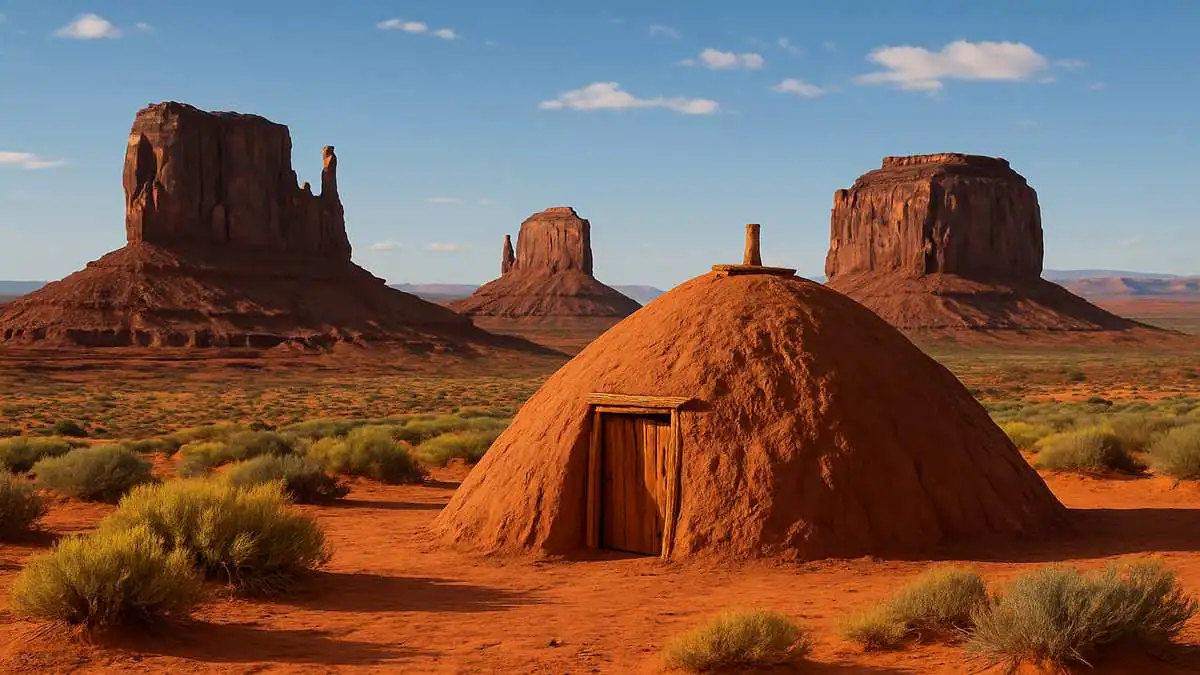
Imagine a world where the land, sky, and everything around you is alive and connected through an intricate web of stories. For the Navajo people, this isn’t just imagination—it’s the essence of their creation story and the guiding principle of their everyday life.



How the Navajo World Came to Be
The Navajo creation story is a fascinating journey through multiple worlds. According to their teachings, the first world was a place of darkness and mist, inhabited by insect-like beings. These early beings made their way through four different worlds, each with its challenges and growth opportunities.
Emerging into the fourth world, also known as the Glittering World, they finally found their home. This journey from darkness to light mirrors a search for balance and understanding, a core theme that permeates Navajo life.



The Role of Clans: More Than Family
Clans play a pivotal role in Navajo society, acting as more than just markers of familial lines. They form the foundation of social structure, where each individual is connected within a larger tapestry of relationships.
- Affinity and Identity: Each clan carries its unique stories, songs, and responsibilities, offering a sense of identity and belonging.
- Social Balance: Inter-clan relationships are carefully maintained to ensure harmony and cooperation within the community.
- Kinship Obligations: Navajo individuals are expected to uphold and respect their role within this system, fostering unity and understanding.
The concept of balance isn’t merely a task; it’s a core responsibility that ensures the welfare and continuity of the tribe.
Walking in Beauty: Living with Harmony
The idea of “Walking in Beauty,” or Hózhó in Navajo, captures the essence of living in harmony with the environment, the people, and oneself. Imagine waking up each day with the goal of maintaining balance in all facets of your being. Isn’t that a beautiful way to approach life?
In the Navajo language, Hózhó extends beyond mere visual beauty. It encompasses health, harmony, and holistic well-being. Every interaction, whether with a person or nature, is a chance to honor this balance and the interconnectedness of life.
Why the Deer Was Never Just a Deer
In the Navajo creation story, animals aren’t merely sources of food or labor. They are teachers, guides, and guardians. The deer represents more than just an animal to hunt; it symbolizes grace, humility, and the natural order.
By learning from animals, the Navajo people embrace lessons of survival, respect, and the cycles of life. This deep respect for wildlife forms a vast part of the ethical and ecological knowledge passed down generations.
Practicing K’é: The Heart of Navajo Philosophy
At the heart of these stories and practices is K’é, a concept that resonates with kinship and empathy. K’é encourages treating all people and life forms as relatives, promoting peace and solidarity. It’s a gentle reminder that in a world filled with diverse personalities and choices, maintaining empathy can guide us toward understanding and unity.
Whether interacting within a family or community, K’é serves as a moral compass, reminding all to act with love and respect. It’s this essence of K’é that allows the Navajos to maintain such a vivid and soulful connection with both their ancestors and the natural world around them.
The Creation Story as a Guide for Today
The Navajo creation story isn’t just an ancient myth. It’s a living, breathing guide that influences daily life, weaving through their language, ethics, and worldview. Each layer of the story serves as a lesson on resilience, harmony, and respect.
In a fast-paced world that occasionally forgets the importance of these values, we can all learn from the Navajo way of life. Their stories hold reminders that balance, connectedness, and respect for all beings are not only ideals to aspire to but essential threads that, when woven together, create the fabric of life itself.
As you ponder the depth and wisdom of the Navajo creation story, perhaps ask yourself: How can you bring a touch of this harmony and connection into your own life? What would ‘walking in beauty’ mean for you today?