The Bird Tribes – A Cherokee Legend.
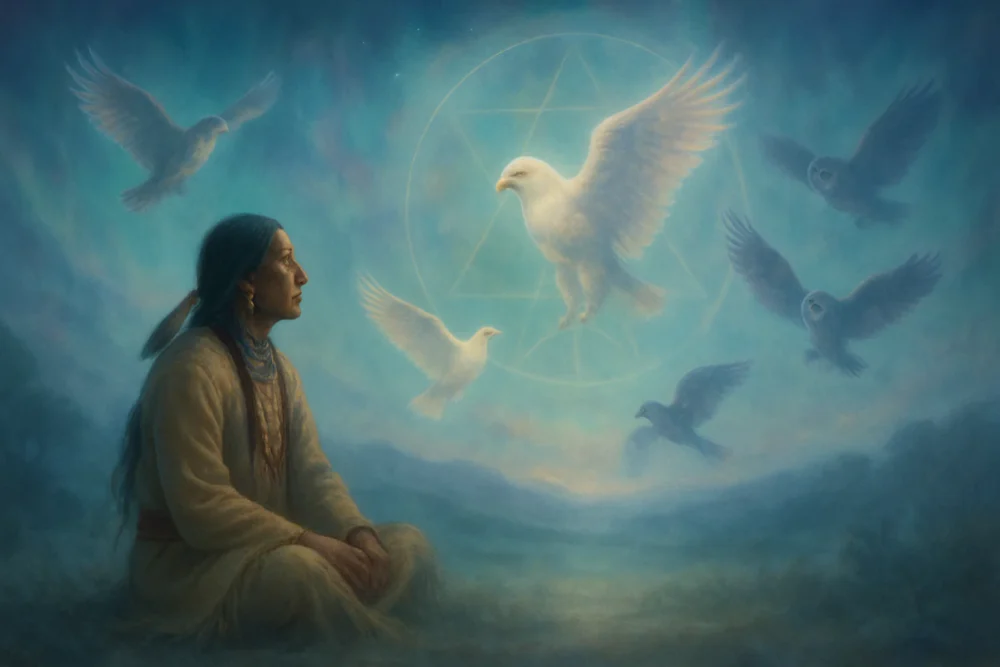
In the Cherokee tradition, winged creatures are collectively known as aninâ’hilidâ’hï, or flyers. Within this group, birds are referred to as tsi’skwa, a term that generally does not include domestic fowls introduced by Europeans. When distinguishing between wild and tame birds, the terms inägëhï and uluñni’ta are used, respectively. The robin is called tsiskwa’gwä, while the sparrow is named tsikwâ’yä, considered the “principal bird” due to its widespread presence. Bird names often mimic their calls, such as wa`huhu’ for the screech owl or kâgû for the crow. The turtledove, known as gulë’-diska’nihï’, is named for its cry, resembling the word for acorn. The meadowlark, called näkwïsï’, is named after the star-like appearance of its tail in flight. The Cherokee also hold beliefs about bird-related illnesses, attributing certain diseases to bird ghosts or feathers present in the home.
The eagle, or awâ’hïlï, holds significant importance among the Cherokee and is considered sacred, especially in rituals related to war. The golden or war eagle, known as the “pretty-feathered eagle,” is particularly valued for its decorative tail feathers. The act of hunting an eagle was a community event, requiring a skilled eagle killer chosen for his understanding of the necessary rituals to prevent tribal misfortune. The process involved a solo journey into the mountains, where the eagle killer would fast and pray before hunting. Upon successfully shooting an eagle, he would offer a prayer to divert vengeance from the tribe, blaming a Spaniard instead. This practice reflects the enduring impact of early Spanish explorers on Cherokee culture. The eagle’s body was left for four days to allow parasites to leave before the feathers were collected for ceremonial use. These feathers were treated with reverence, stored in a special hut, and incorporated into the Eagle dance, performed only when snakes had retreated for winter.
-
 $9.95Select options This product has multiple variants. The options may be chosen on the product page
Owls, such as the tskïlï’, u’guku’, and wa`huhu’, are viewed with caution, often associated with witches or ominous spirits. Their cries are considered ill omens, and special rituals involving owl feathers are believed to grant wakefulness or early rising. The buzzard, sulï’, plays a role in Cherokee creation stories and is respected as a healer among birds, though its feathers are avoided by ball players to prevent baldness. Hawks, especially the mythic Tlä’nuwä’, and other birds like the redbird and the yellow mockingbird, feature prominently in tales that convey moral lessons and cultural beliefs. Each bird holds a unique place in the Cherokee worldview, contributing to the rich tapestry of stories that continue to be shared and revered within the community.
This is a respectful retelling of a Cherokee legend, honoring the living tradition and cultural heritage of the Cherokee people.


Return to Cherokee Legends